
Garage Floor Coatings for Homestead’s Heat and Afternoon Storms
A Homestead garage gets hit from every side. Afternoon storms push water under the door, the summer sun warms the slab and lets it cool again every day, and humidity keeps working moisture up through the concrete. We grind that slab open, test it, and lay a flake floor that wipes clean after the storm passes and shrugs off the oil drips and tire marks in between.
Garages From Campbell Drive to SW 328th Street
Brand-New Builds
The newer homes going up along Campbell Drive and SW 328th Street hand you a clean garage slab and not much else: bare gray concrete, maybe a light sealer from the builder, and a surface that starts dusting and staining the first month you park on it. That is the easiest moment to coat. We grind off whatever the builder rolled on, test the slab for moisture, and get a flake floor down before oil and tire marks have a chance to soak in.
Slabs in Established Neighborhoods
A house that has been lived in for a while usually has a slab with a story. There is a patched crack, a rust ring where the old freezer sat, a dark spot from a car that leaked for years. We chase and fill the cracks, degrease what has soaked in, and grind the whole floor to open concrete so the coating bonds to the slab itself. A full flake broadcast then covers the repair lines, and the floor reads as one surface again.
Low Garages That Take On Water
Some garages here sit low enough that a hard afternoon storm sends a sheet of water across the floor. Bare concrete drinks that in and stays damp, and the musty smell follows. A sealed flake floor gives the water nowhere to go. You squeegee it out the door, rinse off the grit, and the concrete underneath stays dry. In those garages we build a little extra texture into the broadcast so a wet floor still feels solid underfoot.
The Garage That Holds Everything
When hurricane season comes around the garage fills up fast: water jugs, the generator, shutters, patio furniture pulled in from the yard. The rest of the year it is the tool bench, the spare fridge, and the kids’ bikes. One slab takes all of that dragging and spilling. Coated concrete handles gas, motor oil, and dropped wrenches without staining, and it stops shedding dust onto every box stacked along the wall.
Built Around South Dade Weather
Down the Turnpike
We run south from our Miami-Dade base on the Turnpike, so Homestead and Florida City are an easy drive for the crew, never a special trip.
Moisture Read First
Humidity pushes vapor through slabs here all year. We test before we coat, and a high reading gets a vapor-barrier primer.
One Day, Most Garages
Grind, patch, flake, and topcoat in a single day for most standard garages. If yours needs more, we tell you before you book.
English or Español
Call either line and talk the job through in the language you use at home. The price goes on paper before any work starts.
When Storm Water Comes Under the Door
Homestead has known hard weather since Hurricane Andrew leveled much of the area in 1992. A garage floor down here lives with that climate every day. Heat moves the slab, storms put water on top of it, and humidity pushes moisture up from below.
Heat That Moves the Slab
Summer sun beats on the garage door and the driveway, and the slab inside warms through the afternoon and cools off overnight. Concrete grows and shrinks with that cycle for months on end. Bare concrete answers with hairline cracks and dust. A thin kit coating answers by letting go, usually first in the tire path, where hot tires come in off the road, sit on the film, and pull at it as they cool. A diamond-ground slab under an epoxy base and a polyaspartic topcoat holds, because the base is locked into the concrete and the topcoat is too hard for a tire to grab.
Water on Top, Moisture Underneath
The afternoon storm is the problem everyone sees. Water blows under the door or runs in off the driveway, and a low garage can sit wet for hours. The problem nobody sees is the moisture already inside the slab. Year-round humidity keeps pushing vapor up through the concrete, and a coating laid over that vapor blisters from underneath and lifts in patches. So before anything gets mixed, we test. A normal reading means we go straight to coating. A high reading means a vapor-barrier primer goes down first, and you hear about it at the walk-through, in writing, never as a surprise on install day.
What Goes Down, in Order
Flake is the system most Homestead homeowners ask for, and it earns that spot in a garage that sees rain and motor oil in the same week.
- Diamond grinding, wall to wall: opens the concrete and gives the base coat a real profile to grip, including along the edges where kits always fail first.
- Crack and spall repair: filled and ground flush so nothing shows through or breaks loose later.
- Epoxy base with a full flake broadcast: vinyl chips thrown until the base is buried, which hides tire marks, old stains, and repair lines.
- Polyaspartic topcoat: clear, hard, and quick to cure, and the reason most garages are finished the same day we start.
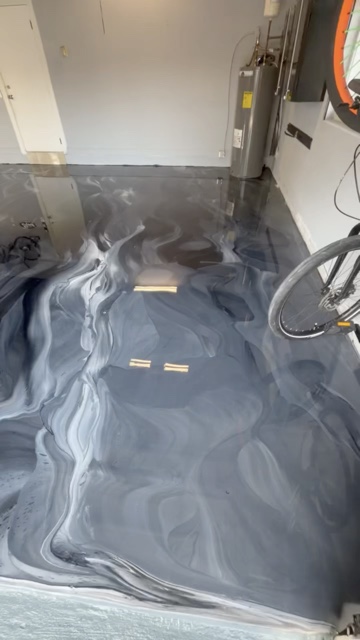
Some owners in the newer builds want the garage to look like a showroom, with swirl and depth in the floor. That is metallic epoxy, the finish pictured on this page, and it is poured and cared for differently than flake. Our metallic epoxy page for Homestead walks through it. If your garage doubles as a real workshop for a car you wrench on, read about our auto shop floors in Homestead too.
Booking the Walk-Through
Call us or send a note through the contact page and we set a time to see the garage. We look over the slab, find where the water comes in, take the moisture reading, and lay flake blends right on your concrete so you see the colors in your own light. You get a fixed written quote for the garage plus anything you want added, like the side walkway. For the other work we do around town, start at our Homestead service page.
Before You Book a Homestead Garage Floor
The things Homestead and Florida City homeowners ask us most before we coat a garage.
01Our house is new. Should we wait before coating the garage floor?
02Our garage takes on a little water in heavy afternoon storms. Is a coating still worth it?
03Can a coated floor handle the heat in a Homestead garage?
04How long will our garage be out of use?
05Do you really come all the way down to Homestead and Florida City?
Your Garage,
Priced on Paper
Call 343 Epoxy and we will come read your slab anywhere in Homestead or Florida City, in English or Español. The flake samples ride along, and the number is written down before you commit to anything. See our garage floor coating work across Miami-Dade County.