
Hialeah’s One-of-One Metallic Floors
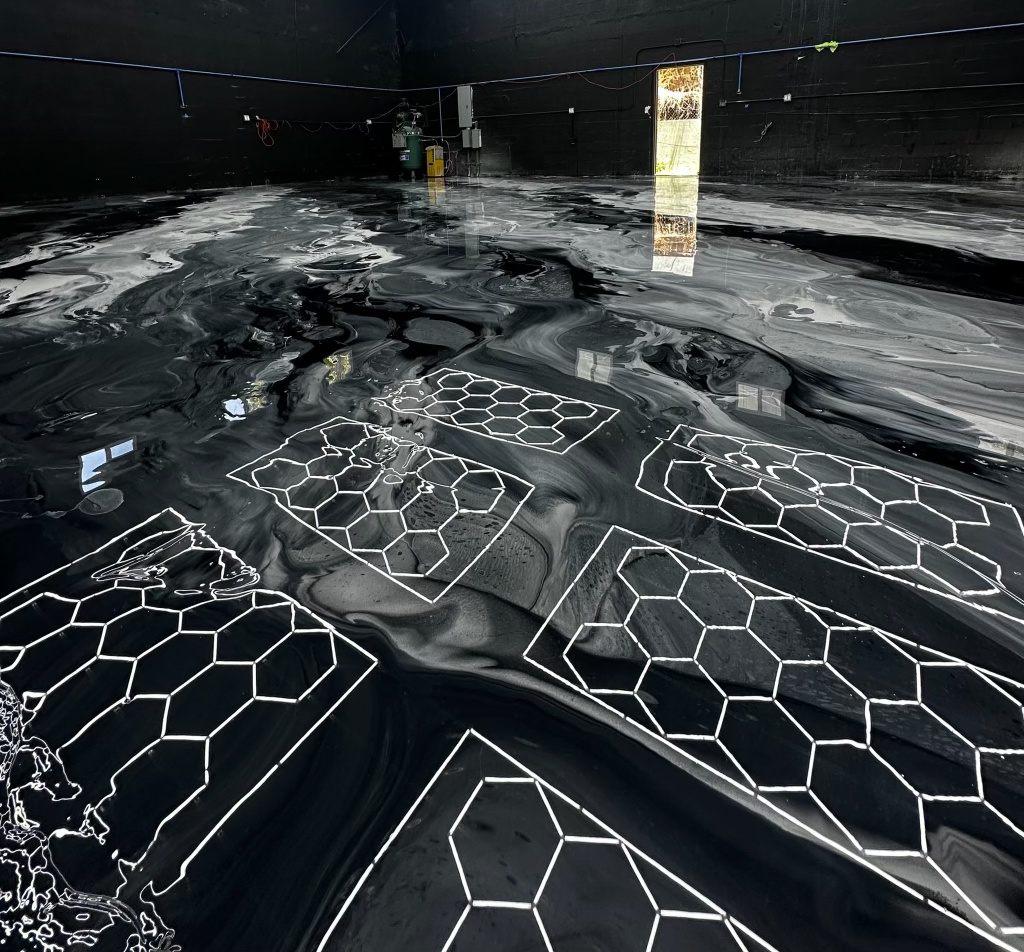
Hialeah does not do subtle, and metallic epoxy was made for that. Black with copper veining under a row of barber chairs. Gunmetal and silver on a parts-counter showroom. Deep burgundy in a dining room off West 49th. The pigment moves while the resin is wet, so the floor you get is the only one of its kind anywhere.
Hialeah Rooms Built for a Metallic Pour
Showrooms and Parts Counters
Auto dealers, custom shops, and parts retailers along Okeechobee Road and East 4th Avenue put expensive product on the floor and then let that floor go gray and stained. A metallic pour under a car or a display rack does something a sealed slab never will: it reflects the product back up. We keep the veining darker where tires and hand trucks land and let it open up in the customer aisle, and the topcoat carries vehicle weight without printing.
Barbershops and Salons
Hialeah barbershops and salons live or die on how the room feels the second somebody walks in, and a chipped tile floor undercuts everything else in the build. Metallic gives you a floor that looks custom without a remodel, and it wipes down after color, clippings, and product spills instead of holding them in grout. We pour these after hours in stages so the chairs are back and cutting the next week.
Restaurants and Dining Rooms
Front of house is where a metallic floor earns its money. A copper and black pour under warm pendants reads like poured stone and gives a dining room a look diners take pictures of. Back of house is a different conversation and we will say so: kitchens want a urethane cement system, not metallic. We install the right thing in each room instead of selling the same floor twice.
Homes and Man-Cave Garages
Plenty of Hialeah homeowners are pulling tile out of living rooms, dining rooms, and converted Florida rooms and pouring metallic instead, one seamless surface with nothing to scrub between. Garages get the loudest version: team colors, a deep blue swirl, or black with a gold vein under the lift. If people actually hang out in the garage, that is exactly the room to spend it on.
The Part Under the Shine
Worked by Hand
Rollers, blades, and air move the pigment while the resin is live. Nobody can copy your pattern, including us.
Samples On Site
We bring cured sample boards to the walk-through so you judge the color under your own lights, not on a phone screen.
Gloss or Satin
Mirror gloss for a showroom, satin for a living room that would otherwise show every footprint. The topcoat is a real decision.
Dew Point Watched
We meter slab moisture and humidity before coating. A metallic floor hazes fast if somebody rushes the window, so we do not.
What Actually Happens During the Pour
Metallic epoxy is the only floor we install where the pattern is created on site, in real time, and cannot be undone once it sets. That is the appeal and it is also the risk, which is why the crew doing the pour matters more here than on any other system. In Hialeah we pour metallic into showrooms, barbershops, salons, restaurant dining rooms, living rooms, and finished garages, and the process is the same in all of them.
How the Pigment Moves
Metallic pigment is a fine reflective flake suspended in clear epoxy. It weighs less than the resin carrying it, so once the material hits the slab it starts migrating: rising, spreading, and separating on its own. Our crew steers that migration with squeegees, spiked rollers, blades, and bursts of air. Push the material one way and you get long veining. Drop a solvent or blow air across it and the pigment splits open into cells and craters that look like stone. Everything cures where it lands, roughly twenty to thirty minutes after the last pass, and after that the floor is what it is. That is why we walk the room and agree on direction and intensity before a single bucket gets mixed.
Picking a Direction
Color is taste, and Hialeah taste runs bold. A few directions we pour here often:
- Black with copper veining: the most requested look in barbershops and man-cave garages, high contrast under directional light.
- Gunmetal and silver: clean and architectural, good under vehicles and display product where you want the merchandise to lead.
- Burgundy, gold, or team colors: for dining rooms, lounges, and garages where the floor is supposed to say something.
- Ocean blue and pearl: lighter and cooler, popular in living rooms and converted Florida rooms with a lot of window glass.
Prep Matters More Under a Mirror
A gloss metallic floor is a mirror, and mirrors show everything underneath. A dip in the slab that nobody notices under tile becomes an obvious dark pool in the reflection. A crack that was never chased and filled telegraphs through within a season. So we diamond-grind the whole slab to open the concrete, chase and fill cracks and joints with epoxy repair mortar, flatten the low spots, and moisture-test before priming. Older Hialeah slabs from the fifties and sixties often have no vapor barrier under them, and vapor pressure will lift a coating right off a slab that tested wet. When we find that, we prime with a moisture-tolerant system instead of hoping. Prep is most of the labor on a metallic job and it is the reason a floor still looks right ten years later.
Topcoat, Upkeep, and the Weather Window
The metallic effect lives in the epoxy body, so the clear coat over it decides how the floor behaves. Gloss urethane gives you the deep wet reflection people picture when they say metallic, and it belongs in showrooms and garages where that depth is the point. Satin knocks the reflection down, hides dust and footprints, and is usually the smarter call in a living room or a busy dining room. Upkeep splits the same way: a working shop floor wants a dust mop and a neutral cleaner weekly plus a walk-off mat at the door to catch grit, while a house floor mostly just needs mopping. Neither one wants harsh acid cleaners or a scrub with steel. As for scheduling, Miami-Dade humidity sets the calendar. We watch slab temperature against dew point and hold the topcoat if the surface is too close, because coating into condensation gives you a hazy blush you cannot polish out. Most Hialeah jobs run three to four days start to finish. You get a fixed written quote after we walk the space and settle on the look, before anybody grinds anything.
Hialeah Metallic Epoxy Questions
What shop owners, restaurant operators, and homeowners in Hialeah ask before booking a metallic pour.
01Why does every metallic floor look different?
02Will a metallic floor hold up in a working barbershop or restaurant?
03Can you pour metallic epoxy inside a Hialeah house?
04What colors can I get, and who picks them?
05How long does the install take, and what slows it down?
Hialeah Metallic
Floor Quote
Call 343 Epoxy and we will walk your shop, dining room, or house with sample boards in hand so you can see the colors before anything gets poured. See all metallic epoxy services across Miami.