
Garage Floors · Homestead
New homes keep going up around Homestead, and a lot of new owners want the garage floor done before the boxes, the second fridge and the tool chest move in. That timing is smart. An empty garage is the easiest one to coat. The catch is the slab itself. New concrete is still wet inside, and builder slabs come with a few habits of their own. Both decide how the coating goes down and how long it stays put.
Why a New Slab Needs Time First
Concrete does not dry when it looks dry. A new garage slab keeps releasing water long after the builder hands over the keys, and in Homestead the air is humid enough that the slab gives that water up slowly.
Coat too soon and the moisture has nowhere to go. It pushes up under the film and shows as blisters, soft spots or a coating that lets go at the edges. The floor looked perfect the day we left, and months later it fails from underneath.
Then there is whatever went on the surface. Builders often spray a curing compound or sealer on fresh concrete to control how it dries. That layer helps the slab and ruins a coating’s bond, so it has to come off.
None of this means waiting forever. It means the slab gets measured, and we tell you plainly if the garage needs more time before we can do it right. If you are closing on a house in the growing communities along Campbell Drive or SW 328th Street, call early and we can plan the work around your move-in.
Testing Moisture Before Anything Goes Down
On a new slab we test before we settle on a system. The test shows how much moisture is moving up through the concrete, and that reading decides the primer.
Year-round humidity drives moisture through slabs all over South Dade, so we test older homes too. On a new house it matters more, because the reading can change a lot in the first stretch after the pour.
If the reading is in range, the standard system goes down. If it runs high, there are two honest options. One is a primer made for damp concrete under the coating, which lets the floor go in sooner. The other is waiting a while and testing again.
We will tell you which one we would pick for our own garage, and why. The system details are on our garage floor coatings page for Homestead.
What Builder-Grade Concrete Hides
Builder slabs are poured fast, and it shows once the garage is empty and the light comes in low through the door.
Power troweling leaves a hard, glassy top layer called laitance, and a coating will not grab it well. Control joints get cut where the builder needed them. Hairline cracks show up in the first months as the slab shrinks, and nearly every new garage has a few. There is often drywall mud on the floor, a dried paint drip by the door into the house, or a sticky square where a moving mat sat.
Grinding takes care of most of it. We mechanically grind the whole floor to open the surface so the system bonds into the concrete. Cracks get routed and filled. Control joints are either filled and coated over or kept as working joints, and we talk that choice through with you, since a joint that keeps moving will show through anything laid on top.
Flake or Metallic for a New Garage
Flake is the most requested garage system in Homestead, and it earns that. Vinyl chips broadcast into the epoxy hide dust and tire marks, give the floor some grip, and stand up to oil drips and rain blowing in under the door.
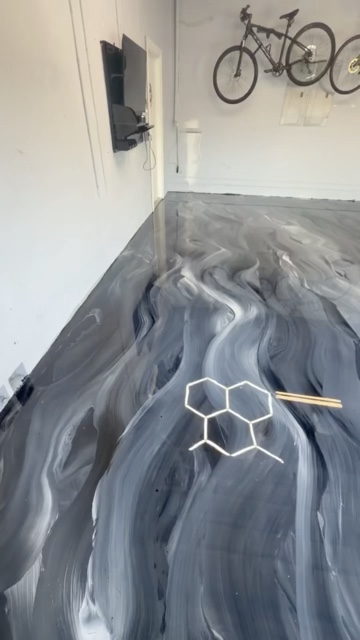
Metallic is the other road, and it shows up more and more in the area’s newer construction. The finish is poured and worked by hand, so it moves, swirls and throws light around, and no two floors come out alike. It suits a showroom garage or a garage that doubles as a room people actually spend time in.
The trade is upkeep and grip. Metallic is glossier and shows dust and tracked-in sand sooner than a busy flake blend. A slip-resistant additive in the topcoat is worth asking for if the garage ever gets wet.
Our metallic epoxy page for Homestead shows how the pour works if you are leaning that way.
How a One-Day Garage Install Runs
Most standard flake garages go from bare slab to finished floor in a single day. The crew comes straight down the Turnpike from our Miami-Dade base, and the day runs in a fixed order.
Prep comes first and takes the longest: grinding, vacuuming, crack repair and edge work along the walls. The base coat goes down next, and flake is broadcast by hand while it is still wet. Once that sets, we scrape and vacuum off the loose chips so the surface is even, and the topcoat seals everything in.
Before we leave, you get a short list: when you can walk on the floor, when you can park on it, and what to keep off it for the first stretch. Hot tires and a loaded tool chest dragged across fresh topcoat are the usual mistakes.
Metallic runs on its own schedule because the pour needs more working time, and we lay that schedule out for you before anything is booked.
What New Homeowners Ask Us
How soon after closing can you coat my garage?
That depends on when the slab was poured. If the house was finished a while back, the floor may be ready now. If the concrete is recent, we test it on site and tell you whether it can take a coating yet or needs a primer made for damp concrete. Either way you get the reading and a straight answer before anything is booked.
Do hairline cracks in a new slab have to be fixed first?
Yes, and they are handled during prep. We route small cracks open and fill them so the coating has a solid, even surface to bond to. A flake blend hides the repair well. Metallic shows more of what is underneath, so on a metallic floor we talk through where a repair might read through before we pour, and you decide with that in mind.
Can you coat the garage after we have moved in?
Yes. Everything on the floor has to come out for the day, including shelving that sits on the slab, and the car stays in the driveway until the topcoat is ready for tires. Plenty of owners wait a few months after moving in, once they know how they use the garage. An empty garage before move-in is simply the easier day for everyone.
FAQ
New Garage Questions
How soon after closing can you coat my garage?
That depends on when the slab was poured. If the house was finished a while back, the floor may be ready now. If the concrete is recent, we test it on site and tell you whether it can take a coating yet or needs a primer made for damp concrete. Either way you get the reading and a straight answer before anything is booked.
Do hairline cracks in a new slab have to be fixed first?
Yes, and they are handled during prep. We route small cracks open and fill them so the coating has a solid, even surface to bond to. A flake blend hides the repair well. Metallic shows more of what is underneath, so on a metallic floor we talk through where a repair might read through before we pour, and you decide with that in mind.
Can you coat the garage after we have moved in?
Yes. Everything on the floor has to come out for the day, including shelving that sits on the slab, and the car stays in the driveway until the topcoat is ready for tires. Plenty of owners wait a few months after moving in, once they know how they use the garage. An empty garage before move-in is simply the easier day for everyone.
Show Us the New Slab
A phone photo of the empty garage and the month the house was finished tell us a lot before we come out. We test the concrete on site, and the fixed written quote follows. English and Español.
Get a Fixed Written Quote →Garage floor coatings in Homestead · Gallery · (305) 409-9022