
Auto Shop Epoxy for Homestead Service Bays
The shops around Homestead-Miami Speedway, and the mechanic garages spread along the commercial corridors, put a floor through more than most businesses ever will. Oil, hydraulic fluid, tire marks and heavy equipment, all day long, in a bay that bakes by noon and takes rain sideways when a storm pushes through the open door. We coat those floors with a build made for that kind of use, and we plan the install so cars keep moving through your shop while we work.
Bays We Coat Down South
Mechanic Garages
General repair is where the floor takes the steadiest beating. Oil drips from every car on the lift, hydraulic fluid weeps from floor jacks, and creepers roll through whatever is already down there. Over a few years the slab goes black in a pattern that matches your bay layout exactly. A sealed floor keeps every one of those fluids sitting on top, where a rag or a squeegee takes care of it at the end of the day.
Motorsport Shops Near the Speedway
The businesses on the speedway corridor work on cars that get pushed hard and serviced often. Trailers back in, heavy equipment rolls across the slab, and tires leave marks everywhere a car gets spun around or pushed into place. These shops also bring customers inside who care how the operation looks.
Fleet and Heavy Equipment Bays
Trucks, trailers and equipment put a lot of weight on a small footprint, and they leak on their way in and on their way out. Hydraulic lines are the usual source. We build these bays thicker, repair the slab under the heaviest parking spots before we coat, and add traction where the crew climbs in and out of cabs on a wet floor after the afternoon storm rolls through.
Parts Rooms and Customer Counters
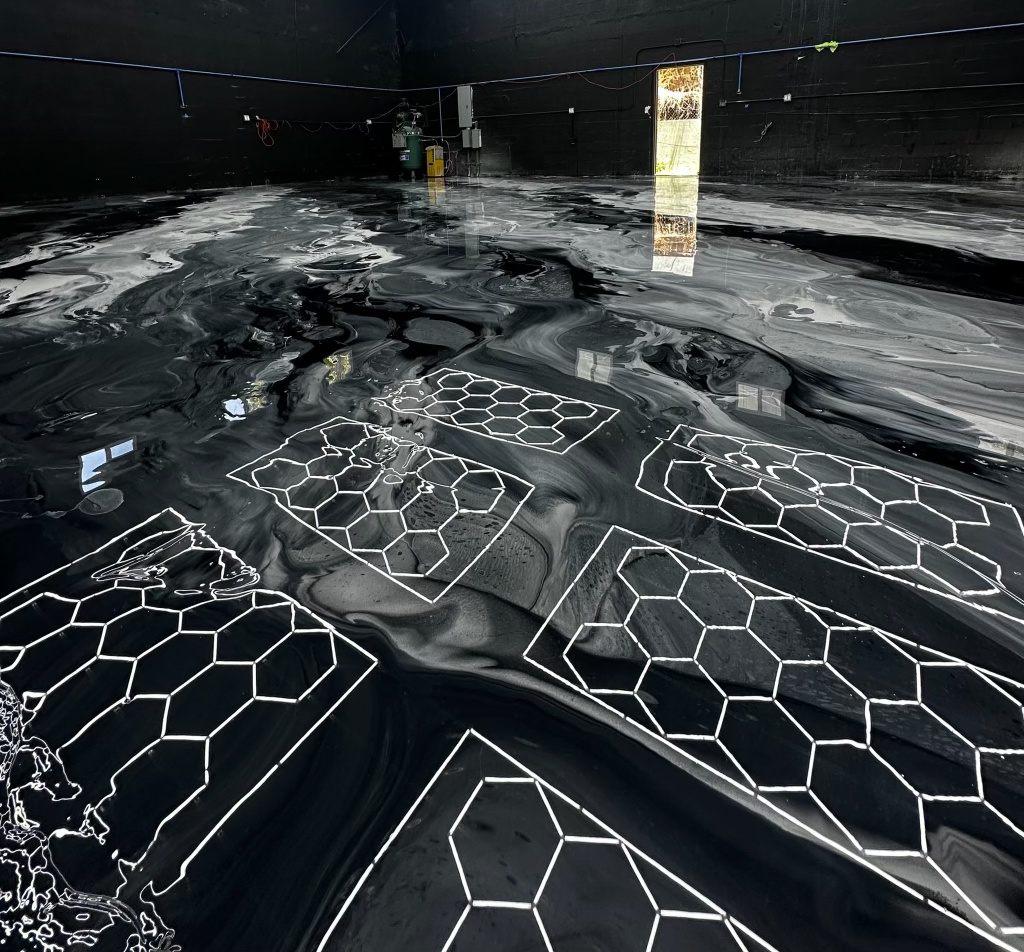
The front of the shop never sees a lift. It still sees every boot that walked through the bays. Parts rooms collect dropped boxes and rolling carts. The counter area is where a customer decides whether to trust you with the car. We usually give these rooms a smoother, cleaner finish than the bays, and some owners take it further with a metallic floor in the waiting area.
What the Build Is Made to Handle
Oil and Hydraulic Fluid
A chemical-resistant topcoat keeps the fluids that stain bare concrete on the surface until somebody wipes them away. Nothing soaks down into the slab.
Heat in the Bay
Bays heat up with the doors open and cool off overnight. That daily swing slowly cracks bare concrete. A cured coating moves with it.
Rain Through the Door
Storm water that blows in across the apron stays on top of a sealed floor and squeegees out instead of soaking into the slab.
Coved at the Walls
Coved bases carry the coating up the wall, so fluid from the parts washer and mop water have no seam to sit in.
Why Homestead Shop Floors Wear Out Early
A shop floor in Homestead lives through a rougher cycle than one farther north in the county. Summer heat pushes into the bays through doors that stay open all day, and the concrete expands. It cools off and contracts at night. Afternoon storms roll in on schedule, and the low-lying lots down here send water across the apron and into the first bay. Underneath all of it, year-round humidity keeps pushing moisture up through the slab. Add oil and hydraulic fluid on top, and bare concrete is under attack from both directions.
Heat, Then Rain, Then Heat Again
The slab near the door takes the worst of it. Sun hits the apron, the concrete warms, then a storm drops cold water on it in a matter of minutes. Do that every summer afternoon for a few years and hairline cracks open up, the kind that catch fluid and dirt and keep widening. A properly bonded coating seals those surfaces before they start, and it flexes through the daily swing without letting go. We still fix any existing cracks before we coat, because a coating only performs as well as the slab under it.
Oil and Hydraulic Fluid Where the Lifts Stand
Every lift and floor jack in the shop is a slow leak waiting to happen, and the drips land in the same few square feet for years. By the time a shop calls us, those spots are usually saturated. We diamond-grind the surface, pull out as much oil as the concrete will give up, and prime the worst areas before the body coat goes down. The build itself is a 100% solids epoxy with a urethane topcoat over it for chemical and abrasion resistance. Around the lift bases we sound the concrete first and repair anything hollow.
- Under the lifts: heavier build plus anti-slip aggregate, since that is where people stand on a wet, oily floor.
- Door aprons: aggregate for the storm water that blows in, and a clean edge where the coating meets the outside slab.
- Parts washers and drains: coating feathered into the drain lip so water runs in instead of pooling.
- Walls: a coved base, so there is no corner seam for sludge and mop water to sit in.
- Front counter and waiting area: a smoother finish that reads clean to customers.
Tire Marks and Heavy Equipment
On a soft finish, rubber scuffs turn into permanent gray smears, and heavy equipment rolling across the slab wears a path right through to the concrete. The urethane topcoat we use is hard enough that most tire marks come up with a degreaser and a scrub pad. For bays where heavy equipment parks or turns in place, we add build and repair the slab under the load points first. A coating over a cracked or hollow slab will not last, however good the material is.
Keeping Cars Moving During the Install
Nobody running a shop wants to hear that every bay goes down at once. At the walk-through we map out which bays can close together, which days are your slowest, and which work has to happen after close. Then we coat the shop in sections and hand bays back as they cure. Your service writer knows the plan before we arrive, so appointments get booked around it. Call (305) 409-9022 or send us your shop details and we will come walk the bays.
From the Bay to Our Crew
What Homestead shop owners and service managers want settled before we set a date.
01Can you coat my shop without shutting down every bay?
02Will storm water blowing into the bays make the floor slick?
03Does the heat inside a Homestead bay affect the coating?
04How does the floor handle hydraulic fluid from lifts and jacks?
05What do you need to see before you give me a price?
Walk the Bays
With Our Crew
We come out, look at the slab around every lift, and leave you with a fixed written quote and a bay-by-bay plan. If your building also holds offices or a showroom, our commercial epoxy work in Homestead covers those spaces, and the home garage coatings page is there for your own garage. See the full auto shop epoxy service, every commercial system we install, or everything we do on the Homestead page.