
West Palm Beach · Palm Beach County
Commercial floors for West Palm Beach businesses
Restaurant, clinic, showroom or warehouse, the floor has to go down without costing you a week of business. We test the slab and spec the system for what the room really goes through. Then we schedule the install around your hours.
Which floor fits which room
A dental operatory and a forklift aisle both want a coated floor. That is about all they have in common.
Restaurants and kitchens
Clematis Street and the downtown blocks are packed with kitchens and bars. These floors need coved edges, no seams and a texture that holds with oil and water both on it. Hot washdown and thermal shock push the spec toward urethane cement or a quartz broadcast.
Medical and dental suites
Exam rooms, operatories and labs get wiped with disinfectant all day. The floor has to be jointless, coved and resistant to the cleaner you actually use. Odor matters too, since these suites usually share a building with other tenants.
Retail and showrooms
Downtown storefronts and the shops across the bridge on Palm Beach, where the floor is part of the display. Metallic epoxy or a clean solid color, put down overnight so the doors open on schedule.
Warehouses near the airport
The industrial pockets around Palm Beach International run forklifts, pallet jacks and racking. Thickness and joint treatment carry this spec. Color comes last.
Auto service bays
The dealerships and service shops along Okeechobee Boulevard deal with hot tires, oil and brake fluid. That calls for a thicker build and a chemical-resistant topcoat, fully cured before the first car rolls in.
Condo parking and garages
Ground-level parking and storage in the downtown towers and along Flagler Drive. Phased by section so residents can still park, ventilated during cure, and coordinated through management from the first walk-through.
Before anything goes down
Moisture test first
Slabs near the Intracoastal and in older buildings can push vapor up from below. We test before quoting, and the reading decides the primer.
Grind to bare concrete
Diamond grinding opens the surface so the coating bonds to the slab itself instead of an old sealer or a past tenant’s paint.
Texture where it gets wet
Kitchens, wash areas and service bays get a broadcast aggregate under the topcoat, so a wet floor still grips a shoe.
Topcoat matched to chemicals
Disinfectants, degreasers, brake fluid and hot oil each go after a coating differently. The topcoat gets picked for what you use.
Keeping the doors open while the floor goes in
The floor is rarely the expensive part of a commercial job. The days you can’t open are. A dental office that cancels a week of patients, or a kitchen that loses a weekend of covers, pays for that long after the floor is paid off. So the schedule gets built first and the products get picked to fit it.
After-hours work is the usual answer. The crew comes in once you close, preps and coats, and leaves the room ready for morning or for the next section. A single room can be one night. A showroom or a warehouse gets split into sections that run in order, with the break lines placed at doorways, aisle edges or a change in use, where a seam looks like it belongs there.
Fast-cure products are what make that work. Polyaspartic and fast-set systems take foot traffic much sooner than a standard epoxy, so a room coated overnight can be walked on by opening. Standard 100% solids epoxy still has its place where a space can sit closed long enough to cure, and it builds thicker per coat, which counts under heavy wheels.
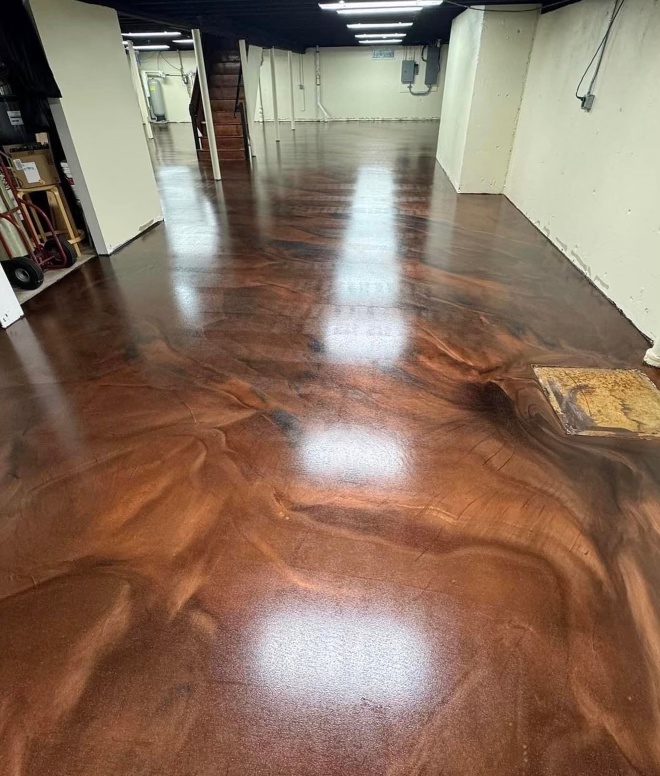
Prep is where commercial floors hold or fail. We diamond grind the slab to an open profile, test for moisture and deal with whatever is already on it. A lot of West Palm Beach commercial space has been through a few tenants, and each one may have left a coating, a carpet mastic or a sealer behind. All of it has to come off. A new floor is only as strong as the weakest bond underneath it.
Slip resistance and chemical exposure get specified room by room. A dry showroom can take a smooth, glossy finish. A kitchen, a wash area or a clinic room that gets mopped with disinfectant needs texture and a topcoat rated for what gets spilled or sprayed on it, so we ask for the product names before we quote.
We’re based in Miami, and Palm Beach County is the north end of where we work. We plan around your hours: walk-through first, then an install schedule built around when the space can close, with materials staged ahead. Every commercial floor carries the same 5-year warranty on materials and installation we put on everything else, and the price is fixed in writing before we start.
Two reviews from business owners
“Best Epoxy Guy in the business. Transformed my commercial property. Definitely recommend him look no where else.”Raymond Contreras, Google review
“Best in the business! These guys were a huge part in creating a custom unique epoxy flooring for my detailing trailer, and they absolutely knocked it out of the park! … Best in the epoxy business hands down”Drace Detailing, Google review
Before you book: commercial floor questions
Can the floor go in without us closing?
Most of the time. Restaurants and retail usually get done between close and open, or over a weekend, with fast-cure products that take foot traffic in hours. A bigger space gets split into sections so part of it stays in use. Give us your hours on the first call and we plan around them.
How do you handle a slab that might have moisture in it?
We test it before we quote. Older buildings and slabs near the water can push moisture up from below, and a coating over a wet slab can blister or let go. If the reading is high, a moisture-tolerant primer goes under the system. If it’s beyond what a primer can handle, we tell you that instead of selling you a floor.
What makes a kitchen floor different from the rest of the building?
Heat, grease and water, all day long. A kitchen floor has to be one continuous surface, coved up the base of the wall so nothing collects in the corner, and textured so it grips with oil on it. Urethane cement or a quartz broadcast system is usually where that conversation lands, because both handle hot washdown better than a standard epoxy.
Our auto shop deals with oil, brake fluid and hot tires. Which system holds up?
A thicker build with a chemical-resistant topcoat, fully cured before the first car comes in. Hot tires soften a thin or under-cured coating and pull it up. We match the topcoat to the fluids you actually use, so tell us what’s on the shelves when we walk the bay.
Is the 5-year warranty the same on commercial work?
Yes. Commercial floors carry the same 5-year warranty on materials and installation as every other floor we put down. Ask for the terms in writing when we send the quote and keep them with your building records.
You’re in Miami. How does scheduling work up here?
We plan Palm Beach County commercial work around your hours. The walk-through comes first. The install then goes on the calendar on the nights or weekend you can close, and you know the dates before work starts. Call (305) 409-9022, or (305) 310-2827 for Spanish.
Can stall numbers and walkway lines go into a condo garage floor?
Yes. Lines and markings can go down as part of the coating system instead of being painted on later, so they wear with the floor. Garages get phased by section so residents can still park, and we ventilate, because fumes sit in an enclosed garage until the coating has cured.
More for Palm Beach County
This page covers commercial work in the city. The full breakdown of systems lives on our main commercial epoxy page, and homes and garages are covered on the West Palm Beach page. We work across Palm Beach County, from Boca Raton up through Jupiter, and finished floors are in the gallery.
Set a site visit in West Palm Beach
Tell us what the space is used for, roughly how big it is, and the hours you can’t close. We’ll walk it, test the slab and send a fixed number in writing with the phasing laid out.