
Detailing · Aventura
Walk into a detail studio along Biscayne Boulevard in Aventura at closing time and the floor tells you what kind of day it was. Foam from the cannon is still drying at the edges. A gray film marks where wheel cleaner ran off a rim, there is a dull patch where somebody wiped degreaser and walked away, and a fine haze of ceramic overspray sits near the prep bay. Bare concrete takes all of that in and keeps it. A coated floor shrugs most of it off, as long as the system fits the chemistry and the layout fits how the shop works.
The Chemistry Coming Off Every Car
Detailers run more chemistry per square foot than most repair shops. Foam cannon soap and rinse water are the gentle part. Degreasers for engine bays and wheel wells are strong, and wheel acids and iron removers are stronger still, made to dissolve brake dust that has baked onto a rim.
On raw concrete, those cleaners soften the surface paste a little at a time and leave the slab dusty and blotchy. On a light-duty garage coating, the acid end of the shelf can dull the gloss or lift the film along a drain line where it puddles every afternoon.
Overspray is a separate headache. Ceramic and sealant products that miss the panel land on the floor and cure there, leaving a tacky patch that grabs dirt for weeks.
So before anyone talks color, we ask for the product list. What you spray, how strong you mix it and where it runs off all point toward the topcoat. The commercial systems on our auto detailing epoxy page are where that conversation starts.
Wash Zone and Delivery Zone Want Different Floors
Most studios have two floors under one roof, even when the concrete is continuous. The wash zone stays wet for hours: hoses, buckets, foam and people moving fast in rubber boots. The delivery zone is where the finished car sits under the lights, gets photographed and is handed back to its owner.
Those areas pull in opposite directions. Where soapy water sits, a smooth high gloss turns slick, so we broadcast texture into the coating there and keep it in the lanes where people circle a wet car. Where nothing gets wet, the texture comes out and the finish can go as clean and reflective as you like.
The line between the two should follow how cars and water actually move, which usually lines up with a drain or a door. We mark it on site with the owner instead of drawing a neat rectangle on a plan.

Light, Gloss and Paint Correction
Paint correction depends on light. Detailers hang bright fixtures overhead so swirls and holograms show up, and the floor becomes part of that lighting rig whether anyone planned it or not.
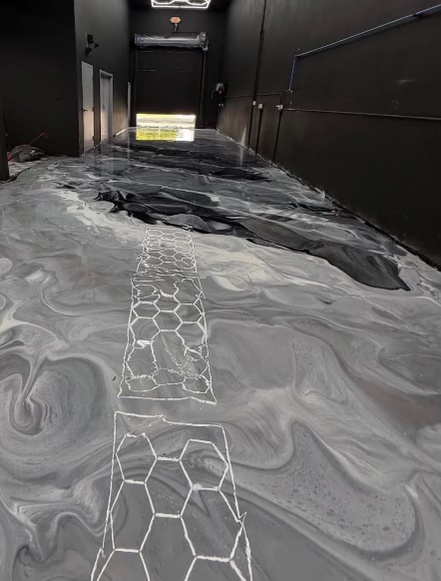
A dark, dusty slab soaks light up. A light or metallic coating with real gloss throws it back toward the lower doors and rocker panels, the places overhead fixtures struggle to reach. On one shop floor we photographed, a run of hexagon ceiling lights reflects as a line of white outlines straight down the bay, which shows how much light the gloss returns.
Metallic epoxy swirls and moves, so no two floors match, and it suits a studio that wants the room to look finished too. A solid light color is calmer and shows dirt sooner, which some owners prefer because it keeps the crew sweeping.
Dealerships down the boulevard face the same lighting question from the sales side, and our showroom floors page for Aventura covers it. In a studio, the gloss belongs where cars sit dry.
Keeping Bays Producing While We Work
A detail studio cannot close for a week. Appointments are booked out, ceramic jobs hold a bay for days, and walk-ins keep pulling up.
We break the studio into phases and coat one phase at a time. Often that means the delivery and correction side first while washing carries on, then the wash zone once those bays are back in service. If the wash area is the worse floor, we flip the order. Every phase gets a point when people can walk on it and a later point when cars can roll back in, and you have both on paper before we start.
Studios inside managed buildings or shared parking areas may also need a certificate of insurance and agreed work hours. That paperwork is ours to handle, and you can ask for it when you reach out to us.
Drains, Slope and the Moisture Check
The floor around a drain works harder than the rest of the room, and it is where cheap coatings give up first. Water sits there, cleaners concentrate there, and a raw edge where the coating stops short lets water creep underneath.
We carry the system down into the drain body instead of ending it at the grate, and we look hard at slope. If water ponds in a corner after every wash, a glossy coating only makes the puddle easier to see. Low spots get corrected first.
Then the slab gets checked for moisture. Concrete this close to the coast holds plenty of it, and a coating laid over a damp slab can blister or let go. We test, then grind the floor down to clean, open concrete so old sealer and tire dressing residue are gone before any resin touches it.
The full system breakdown for this kind of shop lives on our detail studio floors page for Aventura.
Questions From Detail Shop Owners
Will wheel acid damage an epoxy floor?
It can damage the wrong one. Strong wheel acids and iron removers left to pool will dull a light-duty coating and work at its edges. A system picked for the products you actually use holds up far better. Show us the labels or a photo of your shelf, and rinse spills off at the end of the day instead of leaving them overnight.
Can the wash bay be slip resistant and still look good?
Yes. We broadcast texture into the coating where the floor stays wet and run the same color through, so the room still looks like one floor. The textured lanes feel different underfoot and look a little less glossy up close. Most clients only notice the change when they walk from the wash side over to the delivery side.
Do you need the whole studio empty at once?
No. A working studio is usually coated in phases, with some bays open while others are done. Before we start, you know the order of work and when each phase can take foot traffic and then cars. Shelving, hose reels and carts still have to come out of the phase being coated, and we plan where they go.
FAQ
Wash Bay Questions
Will wheel acid damage an epoxy floor?
It can damage the wrong one. Strong wheel acids and iron removers left to pool will dull a light-duty coating and work at its edges. A system picked for the products you actually use holds up far better. Show us the labels or a photo of your shelf, and rinse spills off at the end of the day instead of leaving them overnight.
Can the wash bay be slip resistant and still look good?
Yes. We broadcast texture into the coating where the floor stays wet and run the same color through, so the room still looks like one floor. The textured lanes feel different underfoot and look a little less glossy up close. Most clients only notice the change when they walk from the wash side over to the delivery side.
Do you need the whole studio empty at once?
No. A working studio is usually coated in phases, with some bays open while others are done. Before we start, you know the order of work and when each phase can take foot traffic and then cars. Shelving, hose reels and carts still have to come out of the phase being coated, and we plan where they go.
Show Us Your Wash Bay
Text a few photos of the wash zone, the drains and the delivery area, along with the products you spray most. We talk systems on the phone first, then come see the slab and hand you a fixed written quote. English and Español.
Talk to the Crew →