
Sealing · Aventura
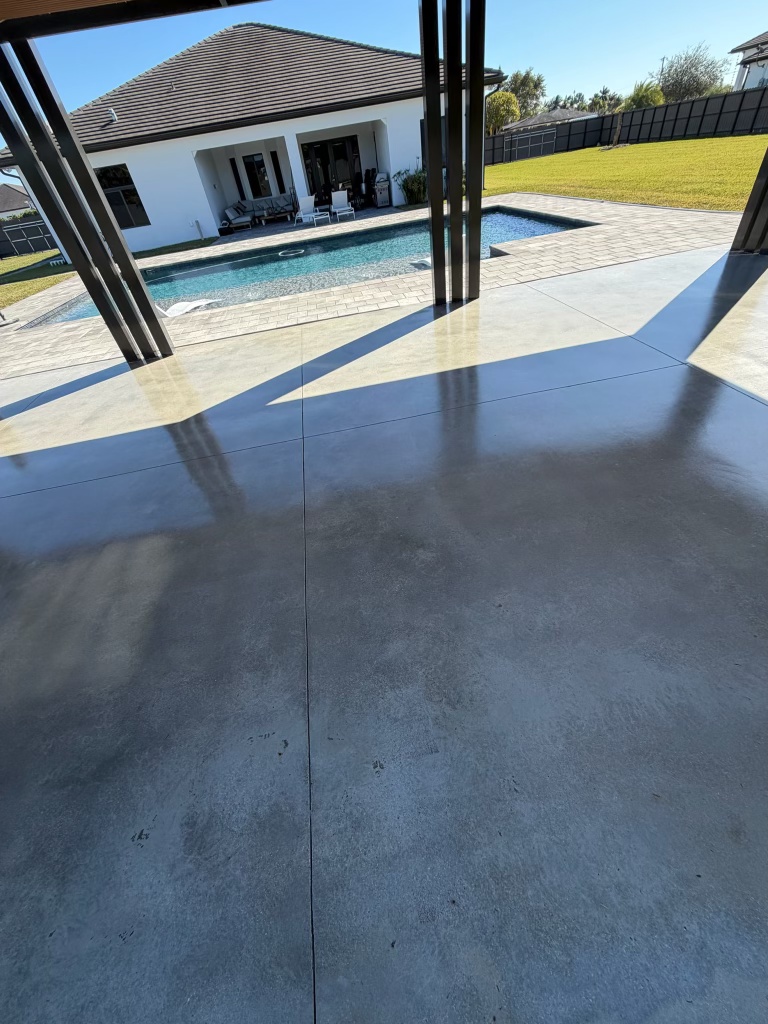
Plenty of homes in Aventura have a covered pavilion or patio slab beside the pool: plain gray concrete under a roof, columns throwing shadows across it, pavers around the water and lawn beyond. Owners call wanting it to look finished, and the first question is whether it needs a sealer or a full coating. Those are two different products doing two different jobs. The same decision comes up on driveways and in the parking structures under condo buildings. Here is how we sort it out on Intracoastal-side properties.
What a Sealer Does and What a Coating Does
A sealer is a thin, clear layer that soaks into the concrete or sits on top of it. It keeps the slab you already have, with its color and texture, and adds protection against water, stains and the chalky dust bare concrete sheds over time. Depending on the product, the look can be matte, satin or wet. The concrete is still what you see.
A coating is a built-up system with real thickness, applied over a ground slab. It covers the concrete with a new surface, whether that is a solid color, flake, a quartz broadcast or a metallic. It hides stains and patches that a clear sealer would only darken.
So the choice usually comes down to two questions. Do you like the concrete you have? And how hard does the surface get used? A sound, good-looking slab with light use is a sealer job. A stained, patched or heavily used slab usually wants a coating. Our concrete sealing page covers the sealing side of our work.
Salt Air, Sun and Rain by the Intracoastal
Properties near the water take three kinds of weather at once. Salt rides in on the breeze and settles on every outdoor surface. Sun hits uncovered slabs hard for most of the year. Afternoon storms soak the concrete, and on a pool slab the splash-out never really stops.
Bare concrete drinks water and the salt that comes with it, and over time the surface can scale and stain. A sealer slows that by keeping water and salt from soaking in. A coating puts a full barrier on top.
Sun is the other factor. Some products yellow or chalk outdoors, so anything going on an open driveway or an uncovered pool edge has to be made for UV exposure. A covered pavilion is easier, since the roof takes most of the sun, though the edges where light reaches still need the same care.
Coastal humidity also means the slab itself holds moisture, which leads straight into prep.
Prep Is Most of the Job
Sealer or coating, the slab has to be clean, open and dry enough to accept it. Most outdoor failures we get called to fix trace back to skipped prep.
Cleaning comes first: pressure washing, degreasing any oil on a driveway or near the grill, and removing old sealer that has gone cloudy or started peeling. New sealer over a failing old layer fails right along with it.
Next the surface gets opened up. For a coating, that means grinding so the resin can grip clean concrete. For a penetrating sealer, the slab needs a profile that lets the product soak in, which can mean light grinding or etching depending on the concrete and the product.
Then the moisture check. Outdoor slabs near the coast can hold a lot of water, especially after a rainy week, and sealing over trapped moisture can turn the surface white or lift it. We test, and we wait when the slab says to.
Cracks get cleaned out and filled before anything goes on top.
Grip Where the Slab Gets Wet
A sealed pool slab can turn slick when wet, and around a pool something is always wet. Kids run, people climb out barefoot, and the glossy wet-look sealer that looks great on a driveway is the wrong finish next to the steps.
For sealed slabs near water, we mix a slip-resistant additive into the final coat, which roughens the surface enough to give bare feet some grip. The sheen usually stays satin or matte.
When an owner wants more grip and more protection, quartz is the system we reach for. Quartz is broadcast into a resin base and sealed under a clear topcoat, which builds the texture into the floor itself, and it is made for wet areas.
Under a covered pavilion there is a balance to strike. The area under the roof stays drier and can carry a little more sheen, while the edge facing the pool gets the most texture. We will walk the slab with you barefoot if that is what it takes to settle it.
Resealing Is Part of Owning a Sealed Slab
A sealer is a maintenance product. It wears from foot traffic, sun and pool chemicals, and eventually water starts soaking in again instead of beading up. That is the signal.
The easy test is a splash of water. If it beads and sits on the surface, the sealer is still working. If the concrete darkens and pulls the water in, the slab is ready for another coat. Busy walking paths, the edge by the pool and any spot under a downspout tend to give it away first.
Resealing a slab that was prepared properly the first time is a lighter job than the original work: clean it, let it dry, recoat. Waiting until the old sealer has peeled or clouded makes it bigger, because the failing layer has to come off.
A coating asks for more work up front and less routine upkeep. If you are weighing the same choice for a garage, our Aventura epoxy flooring page covers that side. Outdoor slab options live on our Aventura concrete sealing page.
Before You Pick Sealer or Coating
Should I seal or coat my covered patio slab?
If the concrete is sound and you like how it looks, a sealer protects it and keeps that look. If it is stained, patched or uneven in color, a coating gives you a new surface instead. Heavy use and a pool right beside it often tip the decision toward a coating with quartz texture.
Will a sealed slab be slippery when wet?
A glossy sealer can be slick when wet. Near pools we mix a slip-resistant additive into the final coat and keep the sheen satin or matte. Where you want more grip, a quartz system builds texture into the surface. We walk the slab with you to decide where texture matters most.
How do I know when it is time to reseal?
Pour a little water on the slab. If it beads on top, the sealer is still doing its job. If the concrete darkens and drinks it in, another coat is due. Paths that see the most foot traffic and the edge by the pool usually show it before the rest of the slab does.
FAQ
Patio Slab Questions
Should I seal or coat my covered patio slab?
If the concrete is sound and you like how it looks, a sealer protects it and keeps that look. If it is stained, patched or uneven in color, a coating gives you a new surface instead. Heavy use and a pool right beside it often tip the decision toward a coating with quartz texture.
Will a sealed slab be slippery when wet?
A glossy sealer can be slick when wet. Near pools we mix a slip-resistant additive into the final coat and keep the sheen satin or matte. Where you want more grip, a quartz system builds texture into the surface. We walk the slab with you to decide where texture matters most.
How do I know when it is time to reseal?
Pour a little water on the slab. If it beads on top, the sealer is still doing its job. If the concrete darkens and drinks it in, another coat is due. Paths that see the most foot traffic and the edge by the pool usually show it before the rest of the slab does.
Let Us Read Your Slab
Snap a few photos of the pavilion, the pool edge and any stains or old sealer, and tell us how the area gets used. We come out, check the concrete for moisture, and give you a fixed written quote for sealing or coating. English and Español.
Have Us Look at the Slab →