
Marine Floors · Stock Island
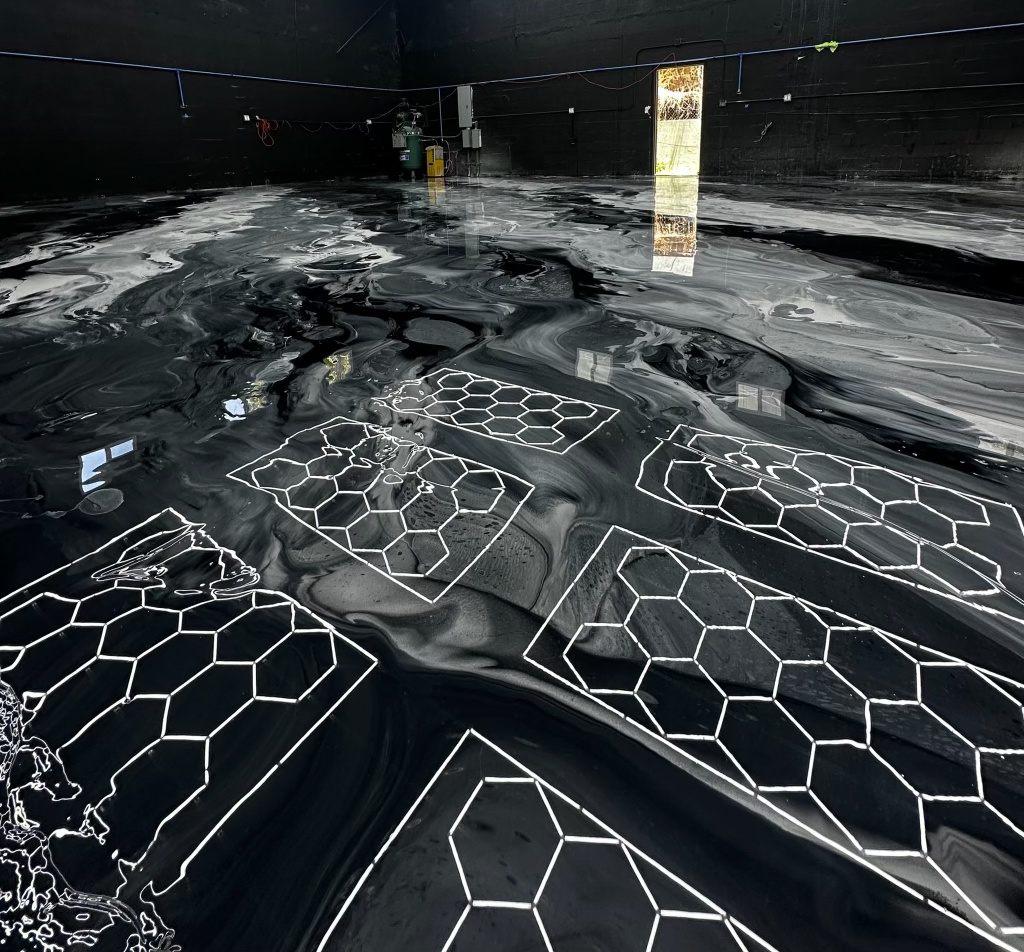
At the end of a day in a Stock Island marine shop, somebody drags a hose across the slab and salt water runs wherever the floor lets it go. That rinse lands on concrete that already took diesel under the bench and solvent at the parts washer, with a trailer and a row of jack stands parked on top. Bare concrete gives up in that room first, and thin coatings follow. This is what we look at before we specify a boatyard or marine shop floor.
What Ends Up on a Boatyard Slab
Start with the list of what actually lands on the concrete, because the coating has to be chosen for the worst of it.
Fuel and hydraulic fluid are the obvious ones. Both stain and slowly break down an unprotected slab, and some light floor paints soften as soon as they sit in a puddle of either. Parts-cleaning solvents are harsher still, particularly under a drip pan nobody empties.
Then there is the dust. Sanding gelcoat and stripping bottom paint throws fine, gritty residue across the floor, and some of it is abrasive enough to scratch a soft finish every time a boot drags through it.
Salt sits underneath all of it. Saltwater comes in on hulls, on trailers and on the crew, and the chlorides it leaves keep working into bare concrete long after the puddle dries.
None of that is unusual for a marine shop. It just means a decorative or light-duty coating is the wrong starting point, however good it looks the day it goes down. How we set up a full shop is on our boat repair shop floor page for Key West.
Washdown Water Finds Every Weak Spot
Most marine shops wash the floor hard, and plenty do it daily. That water moves grit, oil and salt out the door, which is its job, and it also tests every edge, crack and seam on the way.
Water that gets under a coating at a chipped edge travels. It lifts the film from below, carries salt with it, and a spot nobody noticed turns into a sheet that peels. Floor drains and the base of walls are the usual starting points, so we detail them before anything else. Coved bases carry the system up the wall so washdown never meets a raw joint, and the coating is terminated into drains instead of stopping short of them.
Slab cracks get routed and filled before the first coat. Expansion joints are treated as joints, because a floor that ignores them just cracks along the same line later.
Slope counts as well. If washdown pools in a low corner, that corner stays wet and wears first. We look at where water sits before coating and tell the shop owner if the floor needs correcting.
Point Loads From Stands, Hoists and Trailers
A loaded boat trailer spreads its weight over a few tires. A jack stand puts a hull onto a small steel foot. A mobile hoist rolls across the slab with its load swinging overhead. Each one concentrates force into a far smaller area than a person or a pallet jack ever does.
That kind of load punishes a floor two ways. Thin coatings dent or crack under a steel foot, and once the film is broken, washdown water and fluids get underneath. Rolling equipment adds shear on turns, which tears at any coating that is only lightly bonded.
The answer starts with preparation. We mechanically grind the slab to open it up, so the system bonds into the concrete instead of sitting on old sealer or laitance. Then build matters. Heavy-build systems carry enough thickness to take a jack stand without printing through, and aggregate can reinforce the lanes where trailers and hoists travel.
If the shop parks stands in the same spots every week, tell us. Those areas get extra attention.
Urethane Cement or Heavy-Build Industrial Epoxy
These are the two systems we reach for most in Stock Island shops, and the room decides between them.
Urethane cement is the tougher pick when heat, heavy chemical exposure and constant water are all in play. It is rated for thermal shock from hot washdown and puts up with a damp slab better than most resin systems. For the wettest bays, and for any part of a yard that also handles seafood, it is usually first choice. Product detail is on our urethane cement page.
Heavy-build industrial epoxy with non-slip aggregate suits dry service bays, parts rooms and fuel-exposed floors where spills and rolling loads are the main threats. It cleans up easily, it can carry line inlays for walkways, and its brighter finish makes a dropped fastener easier to spot.
Plenty of shops end up with both: urethane cement where the hoses run and industrial epoxy in the bays that stay dry. The industrial epoxy page for Key West has the full system list.
Traction Where Hulls Get Rinsed
The spot where boats get rinsed is the most dangerous patch of floor in a marine shop. It is wet most of the day, it collects soap and fluid runoff, and the people standing there have their eyes on the hull.
A smooth coating there is a liability. We broadcast slip-resistant quartz or aggregate into the system so the texture is locked into the resin and topcoated in place, which keeps it from wearing off the way grit paint does. Texture can run heavier in the rinse zone and finer in the bays, so the floor still squeegees easily where maximum grip is not needed.
Before we settle the texture, we ask the crew where people have slipped. They always know.

What Marine Shop Owners Ask Us
Will fuel or hydraulic fluid soften the floor?
Not on a system chosen for it. Urethane cement and heavy-build industrial epoxy are both specified for fuel, hydraulic fluid and the solvents used around a service bench. Spills should still be wiped up instead of left for days, but a drip under an engine will not lift a floor that was ground, primed and properly bonded to the slab.
Can you coat one service bay while the rest of the shop keeps working?
Yes. We coat a working shop bay by bay and keep a route open for trailers and hoists through the rest of the building. The sequence is written down before we arrive, including when each bay can take foot traffic and when it can take rolling equipment again, because those two milestones do not arrive at the same time.
Does leaving the bay doors open all day hurt the floor?
It can, with the wrong topcoat. Sunlight through an open door yellows many standard epoxies, and salt air settles on everything near the threshold. We put a salt-air rated primer under the system and a UV-stable topcoat on top wherever daylight reaches the slab, so the finish by the door matches the back of the bay.
FAQ
Bay Floor Questions
Will fuel or hydraulic fluid soften the floor?
Not on a system chosen for it. Urethane cement and heavy-build industrial epoxy are both specified for fuel, hydraulic fluid and the solvents used around a service bench. Spills should still be wiped up instead of left for days, but a drip under an engine will not lift a floor that was ground, primed and properly bonded to the slab.
Can you coat one service bay while the rest of the shop keeps working?
Yes. We coat a working shop bay by bay and keep a route open for trailers and hoists through the rest of the building. The sequence is written down before we arrive, including when each bay can take foot traffic and when it can take rolling equipment again, because those two milestones do not arrive at the same time.
Does leaving the bay doors open all day hurt the floor?
It can, with the wrong topcoat. Sunlight through an open door yellows many standard epoxies, and salt air settles on everything near the threshold. We put a salt-air rated primer under the system and a UV-stable topcoat on top wherever daylight reaches the slab, so the finish by the door matches the back of the bay.
Tell Us What Hits Your Slab
A phone photo of the worst stain in the shop tells us a lot before we ever drive down. Send it with the bay sizes, and the fixed written quote follows a look at the concrete. English and Español.
Get a Fixed Written Quote →Boat repair shop floors in Key West · Gallery · (305) 409-9022