
Storm Cleanup · Homestead
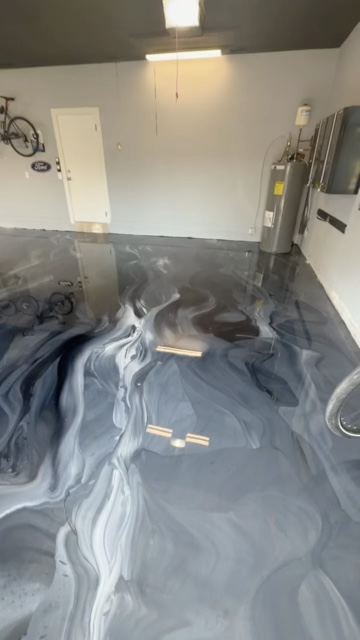
A Homestead afternoon storm can dump enough rain in an hour to push water under the garage door, especially on a lot that sits low. By evening the sky is clear and there is a sheet of muddy water across the floor. What happens next depends on what that floor is. Bare concrete and a sealed coating take the same flood very differently, and the cleanup that follows is different too. Here is what we tell owners of flooded garages and shops.
Bare Concrete Holds On to the Water
Concrete is porous. When storm water sits on a bare slab, the slab drinks some of it in, along with whatever the water picked up on the way: yard silt, lawn fertilizer, oil washed off the driveway.
That water leaves slowly. In Homestead, where humidity stays high all year, a soaked slab can stay damp long after the puddle is gone, and the garage smells like it. Silt and oil stains set into the top of the concrete. As the slab dries, salts carried in the water come back out as a white, powdery film.
Repeated soakings add up. Summer heat already expands and contracts the slab every day, and water sitting in the pores makes cracking and surface flaking more likely as the years go by.
What a Sealed Floor Does With It
A properly installed coating keeps the flood on top of the floor. Water, silt and oil sit on a sealed surface instead of soaking into the slab, which is exactly what you want after a storm.
That turns the cleanup from scrubbing stains out of concrete into moving dirty water out of the garage. Mud wipes off. Oil from the driveway lifts with a mild cleaner. The surface dries as fast as the garage air lets it, since nothing soaked in.
Two things decide how well the floor comes through. The first is the edges. Where the coating meets the walls, the door threshold and any repaired cracks, it has to be bonded tight, because water that finds a lifted edge gets underneath. The second is the topcoat, which takes the grit and the scrubbing.
Flake floors hide leftover silt while you work. Metallic floors show every streak and take an extra rinse. Both clean up the same way. Our garage floor coatings page for Homestead covers the systems we install in local garages.
Cleanup Steps the Same Day
Once the rain stops and the garage is safe to walk into, work in this order. Wear rubber boots and gloves, since storm water carries more than rain. If water reached outlets or anything plugged in, stay out and get an electrician first.
- Push the water out. A wide floor squeegee toward the door moves more water than a shop vac. Start before the silt settles.
- Rinse off the silt. Fresh water from the hose carries mud away before it dries into a film.
- Wash with a mild cleaner. Use a pH-neutral cleaner with a soft deck brush or mop. Skip acids, strong bleach mixes and wire brushes.
- Squeegee again and dry it. Open the door and run a fan. Lift mats and boxes so nothing holds water against the floor.
- Walk the edges. Check along the walls and at the threshold while the light is good.
Cardboard boxes that sat in the water are done. Throw them out instead of leaving them on the floor to hold moisture.
Shops With Open Bays Get It Worse
Auto shops and mechanic garages around Homestead often work with the bay doors up, and a storm that blows in sideways puts water straight onto the floor. In a shop that water mixes with what is already there, mostly oil and hydraulic fluid under the lifts and along the benches.
On bare concrete that mix spreads and soaks in, and a slick film stays behind after the puddle is gone. On a commercial coating built for oil and hydraulic fluid, it stays on the surface where a squeegee and a degreaser can deal with it. Collect that oily water and get rid of it the way your shop handles its other fluids.
Traction matters more in a shop than at home. A floor that takes blown-in rain should have aggregate broadcast into the system at the bay aprons and walkways, so the crew can move safely while they clean up.
If your shop takes on water every rainy season, read our auto shop epoxy page for Homestead, and the commercial epoxy page for Homestead for the rest of the building.
Signs the Floor Needs a Look
Most coated floors come through a flood looking the same once they are clean. A few signs mean we should come see it.
Look for edges that have lifted along the walls or at the door, where a fingernail catches under the coating. Look for bubbles or soft spots that were not there before, which can mean water got underneath. A cloudy white haze that will not wash off is worth a photo. So is a patch that stays dark after the rest of the floor dries, or a crack that has opened across the slab.
Catching those early is what keeps a repair small. A lifted edge can be ground back and patched. Left through a few more storms, water keeps working under it and the damaged area grows.
Take pictures in good light and send them over. Photos usually tell us whether it needs a visit, and we will say so plainly if it does not.
What Homeowners Ask After a Storm
Can I pressure wash my coated garage floor after a flood?
You can, with care. Keep the pressure low, keep the tip moving, and hold it well back from the edges and any repaired cracks, because a hard jet aimed at an edge can lift it. A hose, a soft brush and a mild cleaner handle most coated floors without that risk. Save the pressure washer for the driveway.
Does the coating stop water from coming into the garage?
No. A floor coating seals the slab, so the water that does get in sits on the surface and cleans up fast. It does nothing about water coming under the door, which is a grading, door seal or drainage question. What the coating changes is how much the water leaves behind and how quickly the garage dries out. If water gets in every summer, fix the entry point too.
Should I wait until after hurricane season to coat my garage?
There is no need to. Summer brings afternoon storms to Homestead, and we schedule around the weather like every other trade down here. What matters is a dry slab on install day, and we test for moisture before we start. A floor coated early in the summer is already protecting the concrete when the next hard rain comes.
FAQ
Storm Water Questions
Can I pressure wash my coated garage floor after a flood?
You can, with care. Keep the pressure low, keep the tip moving, and hold it well back from the edges and any repaired cracks, because a hard jet aimed at an edge can lift it. A hose, a soft brush and a mild cleaner handle most coated floors without that risk. Save the pressure washer for the driveway.
Does the coating stop water from coming into the garage?
No. A floor coating seals the slab, so the water that does get in sits on the surface and cleans up fast. It does nothing about water coming under the door, which is a grading, door seal or drainage question. What the coating changes is how much the water leaves behind and how quickly the garage dries out. If water gets in every summer, fix the entry point too.
Should I wait until after hurricane season to coat my garage?
There is no need to. Summer brings afternoon storms to Homestead, and we schedule around the weather like every other trade down here. What matters is a dry slab on install day, and we test for moisture before we start. A floor coated early in the summer is already protecting the concrete when the next hard rain comes.
Send Us the Floor After the Rain
Photos of a lifted edge, a bubble or a stain that will not wash out tell us whether the floor needs a visit. Coating a bare slab for the first time? The fixed written quote follows a look at the concrete. English and Español.
Get a Fixed Written Quote →Garage floor coatings in Homestead · Gallery · (305) 409-9022