
Processing Floors · Key West Bight
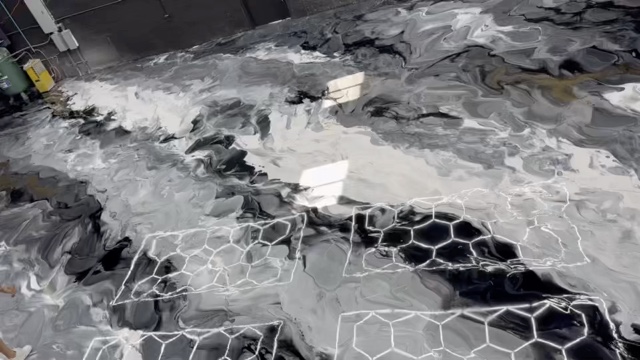
Along the Key West Bight, the working waterfront still runs on boats. Commercial boats unload catch to be cleaned and packed, charter operations come and go at the docks beside them, and processing rooms near the water get hosed down hard after every run. Those floors take cold, heat, water, blood and fish waste in a single shift. Most coatings sold for ordinary commercial rooms are not built for that mix, and a bare slab turns into a slick, porous surface that holds odor in every pit. What follows is what a processing floor on the waterfront actually needs.
What a Processing Room Floor Goes Through in a Day
Picture the cycle. Ice gets shoveled across the floor to keep product cold. Crates slide, carts roll, and scales, blood and waste land on the concrete. When the work is done, crews wash everything down, often with hot water and strong cleaners, then do it again later.
Every step is hard on a floor. Scales and bone fragments grind underfoot. Blood and fish oils soak into any porous surface they reach and sour as they break down. Cleaning chemicals are strong because they have to be. Ice melt keeps the room wet and carries salt with it.
On bare concrete, all of that ends the same way: a pitted, stained slab nobody can clean properly, with standing water in the low spots. On a thin coating, it ends in peeling, usually starting at the drains.
A floor for this room has to seal tight, stay bonded under water and chemicals, and keep its grip when wet. That rules out most of the catalog before temperature even comes up.
Thermal Shock: Cold Slab, Hot Water
Thermal shock is the problem that separates a processing floor from almost everything else we install.
When a slab has sat under ice all morning and then takes a blast of hot washdown, the surface changes temperature much faster than the concrete beneath it. Concrete and coatings expand and contract at different rates. Repeat that often enough and a rigid coating cracks, or loses its grip and delaminates in sheets.
Standard epoxy is rigid, which is why it tends to fail first in a room like this. Thermal-shock-rated urethane cement is made for exactly this cycle. It moves more like the concrete itself, puts up with both heat and cold, and handles moisture coming up from below better than most resin systems. It is what we specify for seafood plants on the island.
More on the product side is on our food processing plant floor page. If a room sees both ice and hot water, urethane cement is where we start, and any other system needs a very good reason.
Why Quartz Broadcast Belongs in Wet Rooms
A processing floor is wet nearly all the time, and wet with things that make a smooth surface treacherous: melted ice, fish oil, soap. Staff are carrying knives, pushing carts and moving fast.
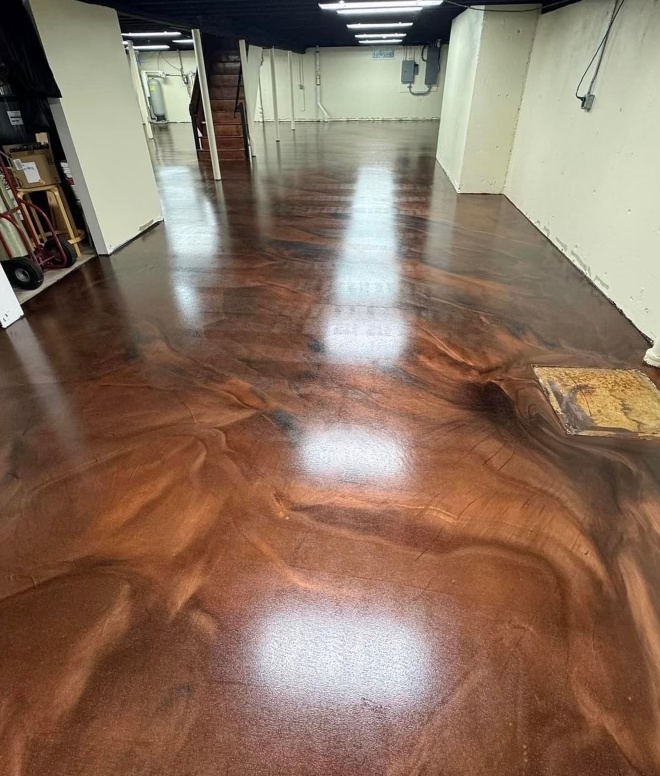
Slip-resistant quartz broadcast builds traction into the floor itself. Colored quartz is broadcast into wet resin, the excess is swept off once it cures, and a sealing coat locks the texture in. Because the grit is part of the system and covered in resin, it does not scrub away like a texture additive mixed into paint.
The amount of texture is a balance. Too little and people slip. Too much and the floor holds debris and fights every cleaning, which matters in a room held to food handling standards. We usually set heavier texture at cutting and rinse stations and a finer profile in packing and cold storage.
Finishes are shown on our quartz systems page, and the systems we run on the waterfront are listed on the industrial epoxy page for Key West.
Coves, Drains and the Edges That Fail First
Processing floors rarely fail in the middle. They fail at the edges, where the coating stops and where the water goes.
Washdown hits the base of every wall, and if the coating stops flat at the corner, water gets behind it. An integral cove carries the floor system up the wall in a smooth radius, so there is no seam for fish waste to collect in and nothing for a hose to pry open.
Trench and area drains take the most water and debris, and a coating that stops short of the drain body leaves a ring of raw concrete that erodes quickly. We terminate the system into the drain with a keyed edge, so the resin is anchored instead of feathered out to nothing.
Water should travel to the drains without pooling, and on older waterfront slabs it often does not. We check the fall before quoting, and if low spots need building up, that goes into the written scope.
Working Around the Boats
A waterfront processing room keeps the boats’ hours. When the commercial boats come in, the room is slammed. When they are out, it may sit quiet for a stretch. We plan around that rhythm.
Most processing floors cannot be shut for long, so the work is zoned. A cold room might be done while product is held elsewhere, then the cutting area, then packing. A waterfront slab that has been wet for years also needs moisture testing before anything is scheduled, and that testing happens on the first site visit so install dates are set from real readings.
If your operation has a slower stretch in the shoulder months, that is usually the best time for the work. Tell us when the boats are out, and the schedule gets built around it.
What Processing Crews Ask Before a Floor Goes Down
Why does urethane cement handle hot washdown better than standard epoxy?
Standard epoxy is rigid, so when an iced slab takes hot water, the fast temperature swing can crack it or break its bond. Thermal-shock-rated urethane cement is built to ride through that cycle. It also tolerates moisture from below better, which matters on waterfront concrete that has been wet for years. That is why we specify it for seafood plants.
How much slip resistance does a processing floor need?
Enough that staff can work safely on ice melt and fish oil, without so much texture that the floor traps debris and slows the cleanup crew. We usually put heavier quartz texture at cutting and rinse stations and a finer profile in packing and cold storage, then lock both in with a sealing coat.
Can the floor be coated without stopping processing entirely?
In most cases, yes. We zone the room so one area is out of service while product moves through the rest, and we plan those zones around when the boats are in and out. Moisture testing happens on an early site visit, so the install dates are set from real readings taken on your slab.
FAQ
Wet Room Floor Questions
Why does urethane cement handle hot washdown better than standard epoxy?
Standard epoxy is rigid, so when an iced slab takes hot water, the fast temperature swing can crack it or break its bond. Thermal-shock-rated urethane cement is built to ride through that cycle. It also tolerates moisture from below better, which matters on waterfront concrete that has been wet for years. That is why we specify it for seafood plants.
How much slip resistance does a processing floor need?
Enough that staff can work safely on ice melt and fish oil, without so much texture that the floor traps debris and slows the cleanup crew. We usually put heavier quartz texture at cutting and rinse stations and a finer profile in packing and cold storage, then lock both in with a sealing coat.
Can the floor be coated without stopping processing entirely?
In most cases, yes. We zone the room so one area is out of service while product moves through the rest, and we plan those zones around when the boats are in and out. Moisture testing happens on an early site visit, so the install dates are set from real readings taken on your slab.
Show Us the Room After Washdown
The quickest start is a call right after washdown, while you can still see where the water sits. Call (305) 409-9022; the fixed written quote comes once the slab has been tested. English and Español.
Get a Fixed Written Quote →